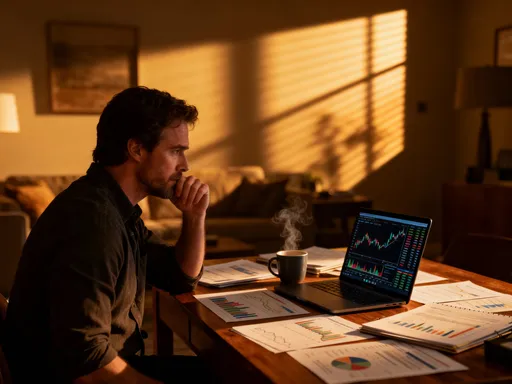
How I Keep My Fun Budget From Blowing Up — Real Talk on Smart Entertainment Spending
We all love concerts, streaming, dining out, or weekend getaways — but how often does that 'harmless fun' mess with your finances? I used to overspend on entertainment without realizing it, until a small habit shift changed everything. This isn’t about cutting out joy — it’s about enjoying more, without the money stress. Let me walk you through how to balance fun and financial control, the practical way I wish I’d learned sooner. Entertainment spending is often seen as a harmless indulgence, but when left unchecked, it can quietly erode savings, delay financial goals, and create unnecessary stress. The good news is that with a few mindful strategies, you can protect your budget while still living fully. This is real talk on how to enjoy life without paying for it later.
The Hidden Cost of Fun
At first glance, entertainment spending seems harmless — a $15 movie ticket, a $12 takeout dinner, or a $59.99 monthly streaming subscription. Individually, these costs feel small, even negligible. But when repeated over weeks and months, they form a steady stream of outflow that many people fail to track. The true danger lies not in any single expense, but in the cumulative effect of repeated micro-splurges. A family that dines out twice a week at an average of $40 per meal spends over $4,000 annually — more than many people allocate for emergency savings. These expenses often fly under the radar because they are irregular or emotionally justified as 'treats.'
What makes entertainment spending especially tricky is its emotional component. Unlike rent or utilities, which are clearly essential, entertainment is tied to mood, identity, and social connection. A spontaneous concert ticket might feel like a once-in-a-lifetime opportunity; a weekend getaway might seem like much-needed self-care. Yet, when emotional spending becomes routine, it morphs into lifestyle inflation — the gradual increase in spending as income rises. People often earn more but feel no richer because their discretionary habits expand in tandem. This pattern creates a false sense of financial stability, masking the fact that savings rates remain stagnant or even decline.
Consider the case of Sarah, a 42-year-old marketing manager who recently received a 10% raise. Instead of increasing her retirement contributions, she began dining out more often, upgraded her streaming plans, and added a monthly wine club subscription. On paper, her income improved, but her financial stress remained unchanged. It wasn’t until she reviewed her bank statements that she realized she was spending nearly $700 a month on non-essential entertainment — more than her car payment. This kind of financial leakage is common and often invisible until it impacts larger goals like home ownership or retirement planning. Recognizing these patterns is the first step toward regaining control.
Why Entertainment Needs a Financial Guardrail
Discretionary spending, by definition, is optional. That flexibility is both its appeal and its risk. Unlike fixed expenses such as mortgage or insurance, entertainment can be adjusted — or eliminated — without immediate consequences. But because it’s tied to pleasure and social engagement, it often receives less scrutiny. The brain’s reward system reinforces these choices: dopamine spikes when we buy tickets to a show or book a vacation, making it harder to pause and assess long-term trade-offs. Behavioral economics shows that humans are wired to favor immediate gratification over delayed benefits, even when the future gain is objectively greater.
This psychological bias explains why so many people overspend on entertainment despite good intentions. A $200 concert ticket might mean skipping a month’s contribution to a child’s college fund or delaying an emergency fund deposit. The cost isn’t just the dollar amount — it’s the opportunity cost, the financial progress that gets sacrificed. When entertainment consistently takes priority over savings, it undermines financial resilience. An unexpected car repair or medical bill becomes a crisis rather than a manageable expense. That’s why setting boundaries around discretionary spending isn’t about deprivation — it’s about protection.
Think of a financial guardrail like the barriers on a highway: they don’t stop you from driving, but they keep you from veering off course. A well-defined entertainment budget serves the same purpose. It allows you to enjoy experiences while ensuring they don’t compromise your financial foundation. Without such a guardrail, small choices accumulate into larger consequences. For example, using a credit card to cover a weekend trip might feel manageable at the time, but if the balance isn’t paid quickly, interest charges can double the original cost. The key is to treat entertainment spending with the same intentionality as essential expenses — not with fear, but with awareness.
Moreover, establishing limits fosters a sense of empowerment. When you decide in advance how much to spend on fun, you reclaim control from impulse and social pressure. You’re no longer reacting to every promotion or invitation — you’re making conscious choices aligned with your values. This shift from reactive to proactive spending reduces money-related anxiety and strengthens financial confidence. Over time, that confidence translates into better decision-making across all areas of personal finance.
Building Your Personal Spending Framework
There is no one-size-fits-all entertainment budget. What works for a single person earning $60,000 may not suit a family of four with a $120,000 income. The goal is not to impose rigid rules but to create a personalized framework that reflects your income, financial goals, and values. The first step is to assess your current spending. Pull up your bank and credit card statements from the past three months and categorize every non-essential expense: dining out, movies, subscriptions, travel, events, and hobbies. Add them up to see the full picture. You might be surprised by how much you’re actually spending.
Once you have a baseline, determine what percentage of your after-tax income feels sustainable for entertainment. A common guideline is the 50/30/20 rule, where 30% of income goes to discretionary spending, including entertainment. However, this may need adjustment based on your financial priorities. If you’re paying off debt or saving for a home, you might aim for 15–20%. The key is balance — you want to enjoy life now without jeopardizing your future. For example, if your monthly take-home pay is $5,000, a 20% entertainment budget would allow $1,000. That’s not insignificant, but it’s finite, which encourages mindful use.
Next, break down your budget into subcategories. Some people prefer broad categories like 'dining and entertainment,' while others benefit from more detail — 'streaming,' 'live events,' 'weekend trips.' The level of granularity depends on your spending habits and self-awareness. If you tend to overspend on concerts, tracking that separately can increase accountability. If coffee runs add up, create a small 'daily treats' line. The goal is clarity, not perfection. A flexible framework allows for occasional splurges — a birthday dinner or a seasonal festival — as long as they’re planned and within the overall limit.
Equally important is identifying what brings real value. Not all entertainment spending is equal. A $30 concert that leaves you energized and connected might be worth more than a $100 dinner that feels forgettable. Ask yourself: What activities truly enrich my life? Which ones do I do out of habit or pressure? This reflection helps distinguish 'worth-it' expenses from 'waste.' Over time, you’ll naturally shift your spending toward higher-value experiences, increasing satisfaction without increasing cost. This is the heart of smart entertainment spending: aligning your money with what matters most.
The Tools That Actually Work (Without the Hype)
In a world full of budgeting apps and financial gadgets, it’s easy to get overwhelmed. Many tools promise instant results but require constant input or complex setup, leading to abandonment within weeks. The most effective tools for managing entertainment spending are simple, low-effort, and integrated into daily routines. One of the most proven methods is the cash envelope system. Allocate a set amount of cash for your monthly entertainment budget and place it in a labeled envelope. Once the cash is gone, spending stops. This physical limitation creates a tangible boundary that digital transactions often lack. Seeing the money disappear makes overspending feel real, not abstract.
For those who prefer digital solutions, many banking apps now offer spending alerts and category tracking. You can set a monthly limit for dining or entertainment and receive notifications when you reach 50%, 75%, and 100% of your budget. These alerts serve as gentle reminders, helping you pause before making another impulse purchase. Some apps even allow you to lock certain categories once the limit is reached, adding an extra layer of control. The key is consistency — choose one tool and use it regularly, rather than jumping from app to app in search of a magic fix.
Another effective strategy is the '24-hour rule' for non-essential purchases. If you’re tempted to buy concert tickets or book a last-minute trip, wait one day before completing the transaction. This short delay disrupts impulsive behavior and allows time for reflection. Often, the urge passes, or you realize the expense doesn’t align with your priorities. This simple pause can prevent hundreds of dollars in regrettable spending each year. Similarly, pre-committing to a monthly entertainment allowance — and transferring it to a separate account — creates psychological separation between fun money and essential funds.
What makes these tools effective is their realism. They don’t require perfection or drastic lifestyle changes. They acknowledge that people will spend on fun — and that’s okay. The goal is not elimination, but awareness and moderation. Real users report that the most successful systems are those that fit naturally into their lives, not those that demand constant effort. A busy mother of two might find the cash envelope too cumbersome, but a weekly spending review with her spouse could work well. The right tool is the one you’ll actually use, not the one with the most features.
When Fun Turns Into Financial Risk
Occasional splurges are part of a balanced life, but certain behaviors signal that entertainment spending has crossed into risky territory. One major red flag is using credit to fund leisure activities. Charging a concert, vacation, or dinner out isn’t inherently wrong — but if the balance isn’t paid in full by the next billing cycle, interest begins to accumulate. A $500 trip charged on a card with a 19% interest rate could cost $600 or more if paid off slowly. Over time, this erodes financial stability and increases debt burden.
Another warning sign is skipping essential payments to afford fun. If you’re delaying a utility bill, cutting a retirement contribution, or dipping into emergency savings to cover a weekend getaway, your priorities are misaligned. Entertainment should never come at the expense of financial security. Similarly, subscription creep — the gradual accumulation of unused or underused services — is a silent budget killer. Many households pay for multiple streaming platforms, music subscriptions, and digital memberships they rarely use. These small monthly fees add up, often exceeding $100, with little return.
Social pressure also plays a role. FOMO — fear of missing out — drives many to spend beyond their means. Friends plan a group trip, coworkers go out for drinks, or influencers showcase luxurious vacations, creating a sense of obligation to participate. While social connection is valuable, it shouldn’t come with financial strain. Learning to say no, or to suggest lower-cost alternatives, is a crucial skill. For example, instead of joining an expensive dinner, you might host a potluck at home. This maintains connection without the cost.
Prevention starts with awareness and pre-commitment. Define your entertainment limits in advance and communicate them to those around you. Let friends know you’re on a budget — most will understand and may even appreciate the honesty. Set rules for yourself, such as 'no credit card use for entertainment' or 'one big trip per year, planned and saved for.' These boundaries protect your financial health while still allowing for meaningful experiences. The goal is not to stop having fun, but to ensure that fun doesn’t come with long-term consequences.
Enjoy More by Spending Smarter
Smart entertainment spending isn’t about doing less — it’s about getting more value from every dollar. Frugality, when applied creatively, can actually enhance enjoyment. Consider the difference between a $150 restaurant meal and a $30 home-cooked dinner with candles, music, and conversation. The latter may create a more memorable experience, not because it’s cheaper, but because it’s more intentional. When you invest time and thought into an activity, it often feels more meaningful than a passive, high-cost alternative.
Seeking value doesn’t mean sacrificing quality. Off-peak pricing, group discounts, and free community events offer rich experiences at lower costs. Many cities host free outdoor concerts, art walks, or film screenings in the summer. Museums often have discounted or pay-what-you-can days. Libraries provide access to books, movies, and even museum passes. These options expand your choices without expanding your budget. Similarly, bundling services — such as sharing a streaming subscription with a trusted family member — can reduce costs while maintaining access.
Another powerful strategy is experience stacking — combining low-cost activities into a fulfilling day. A morning hike, followed by a picnic with homemade food, and an afternoon at a local farmers market can create a richer experience than a crowded, expensive theme park visit. These moments often foster deeper connection and presence, qualities that high-spend activities sometimes lack. The key is intentionality: choosing activities that align with your interests and values, rather than defaulting to what’s marketed as 'fun.'
Reframing your mindset is equally important. Instead of seeing limits as restrictions, view them as enablers of freedom. When you spend mindfully, you reduce financial stress and create space for what truly matters. You’re not giving up joy — you’re investing in sustainable joy. Over time, this approach builds a sense of control and confidence that no impulse purchase can provide. You begin to enjoy experiences more because you’re not worrying about the bill later.
Long-Term Gains From Short-Term Discipline
The benefits of managing entertainment spending extend far beyond the monthly budget. When you consistently align your spending with your goals, you build financial confidence. You stop feeling guilty after every purchase and start feeling proud of your choices. This shift reduces money-related stress, which has been linked to improved mental and physical health. Studies show that financial worry contributes to anxiety, sleep disturbances, and even chronic conditions like hypertension. By taking control of discretionary spending, you’re not just protecting your wallet — you’re supporting your overall well-being.
Moreover, the discipline you develop in one area of spending often spills over into others. You become more mindful of subscriptions, shopping habits, and even grocery spending. Small wins build momentum, leading to broader financial improvements. The money saved from smarter entertainment choices can be redirected toward high-impact goals: paying off debt, building an emergency fund, or investing for retirement. For example, saving $200 a month by cutting unnecessary subscriptions and dining out could grow to over $100,000 in 20 years with a 6% annual return.
Ultimately, financial freedom isn’t about having unlimited money — it’s about having control. When you can enjoy life today without compromising tomorrow, you gain a profound sense of security. You’re no longer at the mercy of impulses or social pressure. You’re making choices that reflect your values and priorities. This is the real payoff of smart entertainment spending: not just more money, but more peace, more confidence, and more freedom to live on your own terms.